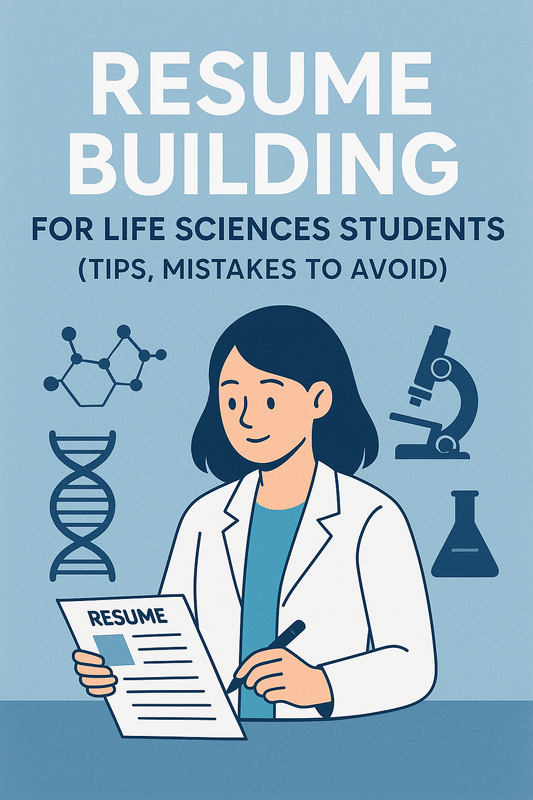
Resume Building for Life Sciences Students (Tips, Mistakes to Avoid)
When applying for jobs, internships, or PhD positions, your resume is the first impression you leave on a recruiter or professor. In just a few seconds, they decide whether to shortlist your application or move on to the next. That’s why a well-structured, ATS-friendly resume can be the key to opening doors to opportunities.
Why Resume Formatting Matters
ATS Compatibility: Most institutes and companies use Applicant Tracking Systems (ATS) that scan resumes for keywords. Poor formatting or excessive graphics can make your resume unreadable by these systems.
Recruiter’s Quick Scan: On average, recruiters spend 6–10 seconds scanning a resume. Clear sectioning, consistent fonts, and bullet points help them find the right information quickly.
Professional First Impression: A neat layout shows attention to detail, professionalism, and seriousness about the opportunity.
Common Mistakes Students Make
Using overly designed templates that are not ATS-friendly
Adding irrelevant details like family background, hobbies, or long paragraphs
Inconsistent fonts, spacing, and formatting errors
Typos and grammatical mistakes
Saving resumes with unprofessional file names like resume123.docx instead of Aditi_Sharma_Resume.pdf
Do’s & Don’ts of Resume Building
✅ Do’s
Keep it concise (1–2 pages max)
Use professional fonts (Calibri, Arial, Times New Roman)
Highlight skills, research, and projects relevant to the position
Use action verbs: developed, analyzed, conducted, achieved
Save in PDF format unless asked otherwise
❌ Don’ts
Don’t add photos, unless specifically required
Don’t use fancy colors, borders, or tables that disrupt ATS scanning
Don’t exaggerate or include false information
Don’t use casual email IDs (e.g., coolgirl@gmail.com)
Choosing the Right Resume Template
At BioDisha, we offer four professional templates designed for life sciences students
(a) Modern Resume – Clean, simple, ATS-friendly, suitable for jobs & internships.
(b) Classic Resume – Professional with subtle design elements for standing out.
(c) Academic Resume – Research focused template.
(d) Researcher Resume – PhD Application focused on academics, research projects, and publications.
(e) Industry Resume – Highlights skills and competencies for freshers with less experience for Corporate and Pharma industry.
Final Resume Checklist
Before applying, review your resume with this quick list
(i) Consistent spacing and alignment
(ii) Grammar and spelling
(iii) Keywords relevant to the job/PhD description
(iv) File name is professional (Name_Resume.pdf)
(v) Saved in PDF format
(vi) Contact details updated and professional
Closing Thoughts
Building a strong resume is not about stuffing information—it’s about presenting your skills, experience, and achievements in the clearest way possible. As a life sciences student, your resume should highlight your research experience, lab skills, internships, and academic strengths.
👉 At BioDisha, we offer resume templates, career guides, and professional resources designed specifically for life sciences students. Whether you are applying for jobs, internships, or PhD positions, we are here to accelerate your journey in life sciences.
Discussion
Reading this article needs no account. Liking it or joining the discussion does.